
Landscaping Installation
Grade, compaction relief, and real topsoil before planting - so a new-build yard actually establishes.
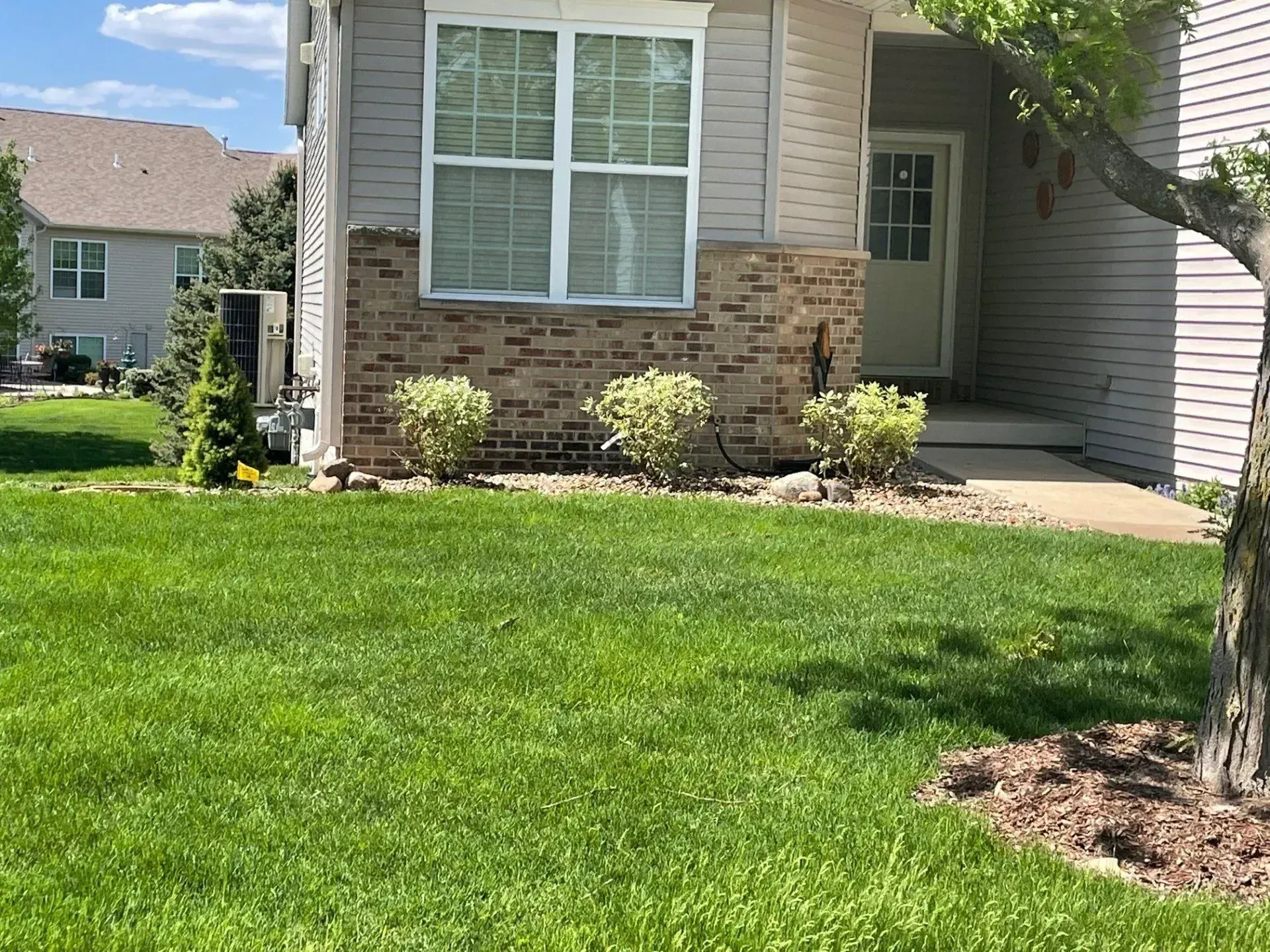
Atkins is in Benton County, west of the Cedar Rapids metro, and a large share of what we do here is establishing yards from scratch - taking a newly built or recently disturbed site and turning it into ground that will actually grow grass and shed water correctly. We serve Swisher, IA and the surrounding communities as well.
The temptation on a new build is to throw seed at it and hope. That rarely works, because the problem is underneath. Construction traffic compacts the subsoil to something close to pavement, and whatever thin layer of topsoil gets spread over the top cannot support roots through a dry August. Our crews cover Walford, IA too.
Doing it properly means establishing the grade first so water runs away from the foundation, breaking up the compaction, bringing in genuine topsoil at a usable depth, and only then seeding or laying sod. It costs more on day one and far less over five years, because the alternative is repeating the cheap version every spring.
Both work. Sod gives you a finished lawn immediately and holds a slope while it roots, which is worth a lot on a graded site. Seed costs less and, given a correct seedbed and enough water, ends up just as good - it simply takes a season. We will tell you which makes sense for your site and timing rather than defaulting to the more expensive option.
Foundation beds on a new build are worth planning rather than filling. The common mistake is planting shrubs at their nursery size, which looks right for two years and then swallows the windows. We plan for mature size, define the bed lines with edging, and mulch to a depth that actually suppresses weeds.
Once established, a lawn on former construction ground still benefits from annual core aeration for several years while the soil recovers. Add overseeding, a sensible fertilization program, and weed control, and the difference by year three is obvious.
Drives and walks on seasonal contract, for houses in town and properties on the outskirts with longer lanes. Booking in autumn secures the route.
We come out, look at the grade and the soil, and quote in writing at no cost. If your site needs less work than you were told, we will say so.
Grade, compaction relief, and real topsoil before planting - so a new-build yard actually establishes.
Annual core aeration and overseeding while construction-compacted soil recovers over its first few years.
Season-timed feeding and weed control that pushes a young lawn to fill in rather than thin out.
Sod finishes immediately and holds a slope while rooting; seed costs less and matches it within a season given a proper seedbed and watering. We recommend based on your site and timing, not on which is more expensive.
Nearly always compaction. Construction traffic packs the subsoil hard, and a thin skim of topsoil over the top cannot hold roots through a dry August. The fix is grading, compaction relief, and real soil depth.
Plan on core aeration and overseeding annually for the first several years while the soil recovers. The difference by the third season is very visible.